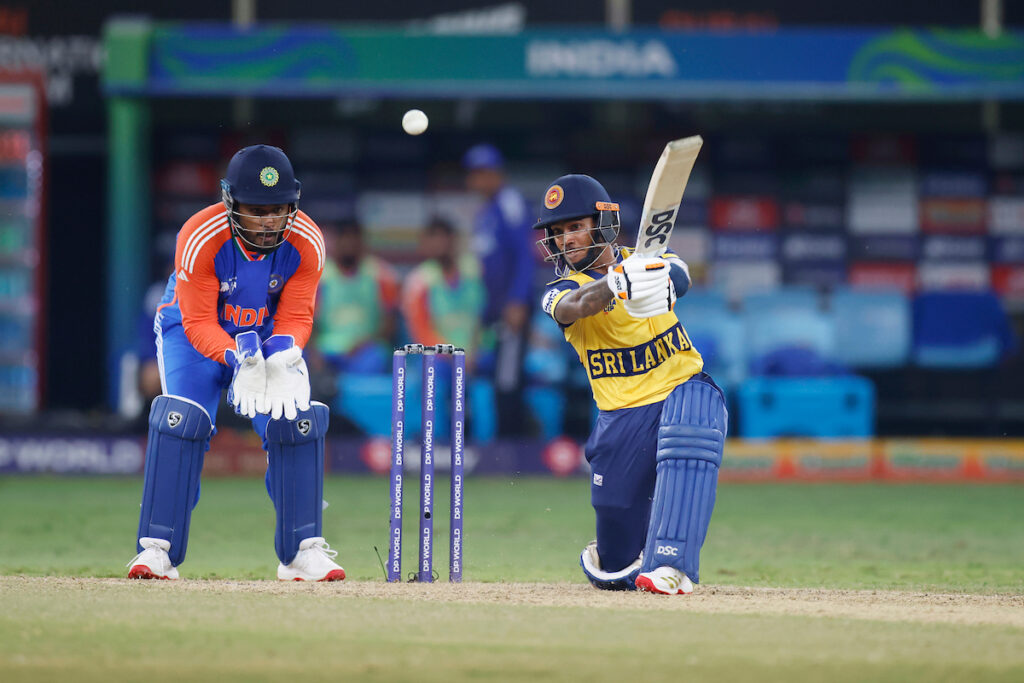
Pathum Nissanka of Sri Lanka plays a shot during the Super Four match of the DP World Asia Cup 2025 between India and Sri Lanka at the Dubai International Stadium, Dubai, United Arab Emirates, on 26 September 2025. Photo by Vipin Pawar / CREIMAS for Asian Cricket Council
Revisiting Bangladesh’s series‑opening chase against Afghanistan
When Bangladesh hosted Afghanistan in a three‑match T20I series in Dubai, much was made of the 3‑0 result, but the tone was set in the very first game. Afghanistan had been quietly confident. Their explosive top order, led by wicketkeeper Rahmanullah Gurbaz and opener Ibrahim Zadran, had impressed on the franchise circuit, and their bowling attack combined experienced seamer Azmatullah Omarzai with leg‑spin maestro Rashid Khan. Batting first, Afghanistan posted 155. Gurbaz blazed away in the powerplay with four sixes, capitalising on overpitched deliveries from Bangladesh’s seamers. Ibrahim played the foil, nurdling singles and pouncing on anything short. Once Gurbaz fell for 44, however, the scoring rate dipped. Bangladesh’s spinners – Nasum Ahmed and Rishad Hossain – conceded just one boundary in the next five overs. Mohammad Nabi attempted to revive the innings with a couple of reverse sweeps but holed out at deep point. Afghanistan’s final total felt 10–15 runs short on a ground with short straight boundaries.
Bangladesh’s chase did not start smoothly. Liton Das edged an inswinger from Omarzai to slip in the first over, and Najmul Hossain Shanto was beaten in flight by Mujeeb Ur Rahman’s off‑spin. At 12 for 2, the scoreboard pressure was palpable. It was then that Shanto, captaining the side, produced a composed innings that belied his 25 years. He decided to counterpunch, stepping out to loft Mujeeb over extra cover and sweeping Rashid behind square. His fifty came off 37 balls and featured five boundaries and two elegant sixes. Importantly, he found a willing partner in Towhid Hridoy, whose wristy drives pierced the inner ring. The pair added 72 in seven overs, rotating strike expertly against Rashid and Nabi. When Afghanistan’s captain turned back to pace, Bangladesh were already ahead of the rate.
As the target approached, there was drama. Omarzai returned and produced a double strike: Shanto top‑edged a slower ball to deep fine leg, and Afif Hossain nicked one behind. Bangladesh still needed 30 off four overs with new batters at the crease. The game hung in the balance until Rishad Hossain, playing only his second T20I, hammered two sixes off left‑arm spinner Qais Ahmad. His cameo of 17 off seven balls swung the momentum decisively. Jaker Ali, calm under pressure, guided the winning runs through midwicket with 11 balls to spare. The celebration in the dugout was exuberant but controlled; Bangladesh knew they had overcome both scoreboard pressure and their own self‑doubt. Why was this chase so significant? For one, Bangladesh had often faltered chasing even modest totals in recent years. Their batting order tended to rely heavily on one or two stars, with collapses common once wickets fell. Here, however, multiple players contributed at key moments. Shanto’s half‑century reinforced his credentials as a leader who can perform under pressure. Hridoy’s shot selection showed maturity beyond his years. Rishad’s fearless hitting highlighted the depth that Bangladesh’s selectors have begun cultivating. Coach Chandika Hathurusingha pointed out after the match that the team had practised chasing scenarios specifically to improve composure in the final overs. The win also gave Bangladesh momentum and belief that they could dominate the series. Afghanistan, on the other hand, were left to rue their inability to accelerate after the powerplay and their overreliance on Rashid and Mujeeb for breakthroughs.