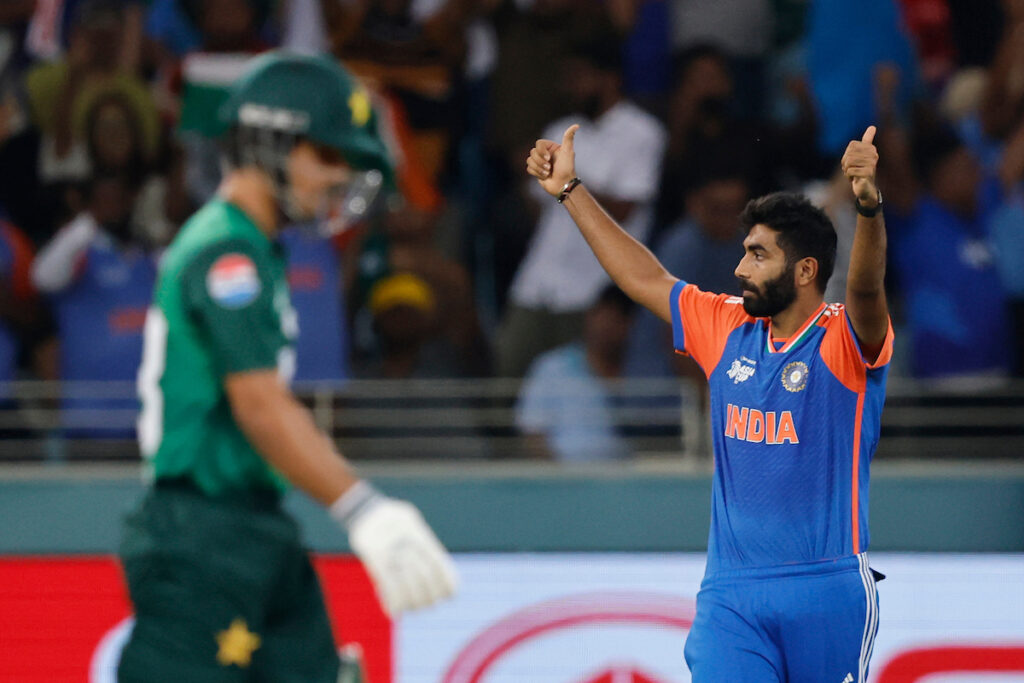
Jasprit Bumrah of India celebrates the wicket of Saim Ayub of Pakistan during the Final match of the DP World Asia Cup 2025 between India and Pakistan at the Dubai International Stadium, Dubai, United Arab Emirates, on 28 September 2025. Photo by Deepak Malik / CREIMAS for Asian Cricket Council
Should the toss be scrapped? Revisiting an old debate
To that end, the Pakistan Cricket Board has begun consulting soil scientists and agronomists to develop pitches that mature over the course of a match rather than exploding from day one. Officials also hope to share best practices with curators in other countries, recognising that sustainable pitch preparation is as much science as art. Despite the noise, most players privately acknowledge that mastering varied conditions is part of the beauty of Test cricket, and they relish the technical puzzles posed by different surfaces.
Few traditions in cricket are as sacrosanct as the coin toss. Captains gather, a coin is flipped, and fate seemingly intervenes to determine who bats or bowls first. Yet the suggestion of removing the toss has resurfaced periodically, most recently during South Africa’s tour of Pakistan. South Africa’s batting coach Ashwell Prince floated the idea of allowing visiting teams to choose whether to bat or bowl first as a means of neutralising home‑ground advantage. He argued that with spinning pitches in Asia and seaming wickets in England, the toss can disproportionately influence the outcome. Ryan Rickelton, a reserve batter, respectfully disagreed, noting that adapting to conditions is part of the game’s skill set.
The idea is not without precedent. The English County Championship experimented with scrapping the toss in 2016, giving visiting teams the option to bowl first. The aim was to discourage the preparation of overly green seaming pitches that resulted in two‑day games. Statistics showed that the experiment marginally increased the number of runs scored and wickets taken by spinners. However, the novelty wore off and counties soon reverted to the traditional toss. At the international level, the International Cricket Council considered the suggestion in committee meetings but decided that the toss remains an integral part of Test cricket’s heritage.
Those advocating for change argue that modern cricket’s commercial demands necessitate closer contests. Home boards earn significant revenue from winning, and thus may be incentivised to prepare extreme conditions. Removing the toss could dissuade curators from producing pitches that offer one‑sided advantage. Critics of the idea counter that the toss is a trivial factor compared to skill, strategy and mental toughness. They note that teams have often won away from home by acclimatising quickly or by preparing for conditions before tours. India’s victories in Australia in 2018‑19 and 2020‑21, achieved on pace‑friendly pitches without key players, are cited as examples of teams overcoming the toss and conditions.
Debate over the toss also intersects with questions about neutral venues, pitch standardisation and the overall direction of Test cricket. As the game seeks to attract new audiences, administrators are wary of altering too many traditions at once. Removing the toss could have unintended consequences, such as teams choosing to bowl first in dead rubber matches to engineer draws. Moreover, the element of chance adds suspense and narrative drama to the start of a Test. While the conversation will likely continue, the consensus remains that the toss, like the new ball and tea breaks, is part of the tapestry of cricket that should be preserved unless overwhelming evidence suggests otherwise.