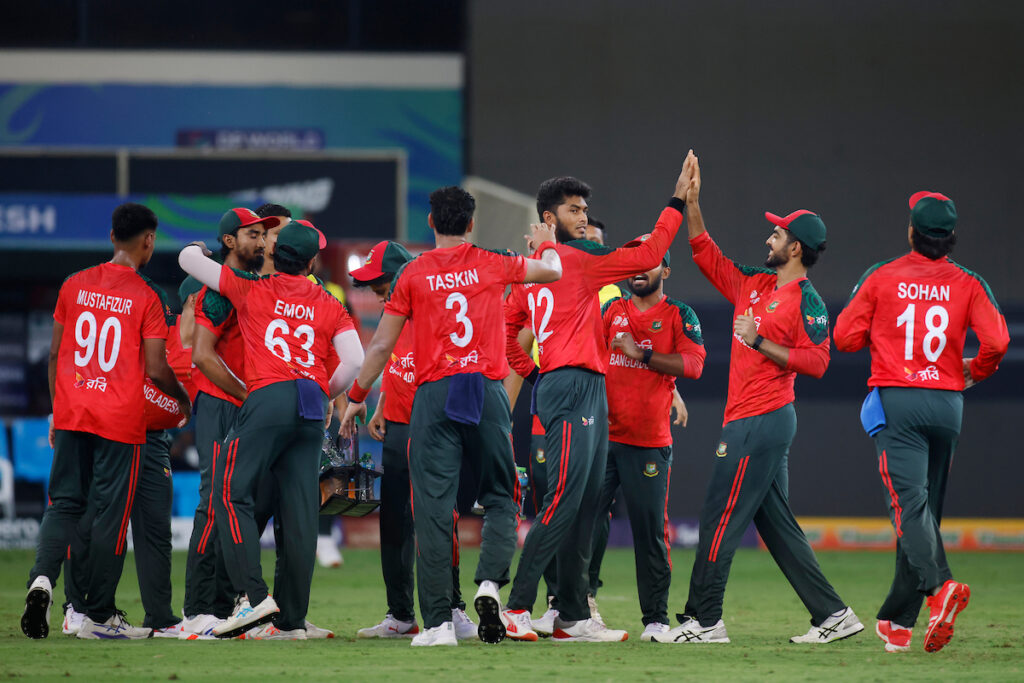
Bangladesh players celebrates the wicket of Fakhar Zaman of Pakistan during the Super Four match of the DP World Asia Cup 2025 between Pakistan and Bangladesh at the Dubai International Stadium, Dubai, United Arab Emirates, on 25 September 2025. Photo by Vipin Pawar / CREIMAS for Asian Cricket Council
Pakistan’s search for spin depth and Asif Afridi’s late bloom
In other sports, variations of the toss have also been debated. American football experimented with alternating possessions in overtime to reduce the impact of a coin flip, and tennis uses tie‑breakers to prevent endless advantage sets. Cricket administrators could explore similar innovations, such as allowing teams to defer their choice until after assessing the pitch for half an hour, or introducing a “double toss” where each side gets to choose once over the course of a series. Such ideas are still speculative, but they demonstrate that tradition and innovation need not be mutually exclusive. Ultimately, any change must consider the sport’s rich history and the narratives that fans cherish. For now, the toss endures as a simple ritual that binds cricket’s past to its present.
When Pakistan announced that 38‑year‑old slow left‑arm spinner Asif Afridi would make his Test debut against South Africa in Rawalpindi, eyebrows were raised. Afridi had been a stalwart of domestic cricket for over a decade, plying his trade for Peshawar and Khyber Pakhtunkhwa with little fanfare. He made his first‑class debut in 2009 and spent years honing his craft on dusty pitches without the spotlight. In the era of franchise leagues, where pace and power dominate, Afridi’s selection appeared anachronistic. Yet his performance vindicated the selectors. Bowling with relentless accuracy, he delivered 20 consecutive dot balls before finally trapping Tony de Zorzi lbw. He followed up by dismissing Dewald Brevis with a beautifully flighted delivery that drifted away and straightened late. His economy rate was half that of his colleagues, and his control allowed captain Shan Masood to rotate his fast bowlers more effectively.
Afridi’s journey is emblematic of the challenges faced by domestic cricketers in Pakistan. Talent is abundant, but opportunities at the highest level can be scarce. Until recent years, the national team relied heavily on established stars and seldom looked to domestic veterans. Afridi’s perseverance – he continued training, played league cricket in England during off‑seasons and took part‑time jobs to support his family – serves as an inspiration to countless players labouring away from the limelight. His debut also highlights Pakistan’s renewed emphasis on spin depth. With Yasir Shah past his prime and Nauman Ali injured, the selectors were forced to think outside the box. Afridi provided variety with his left‑arm angle, complementing the off‑spin of Salman Agha and the pace of Shaheen Shah Afridi.
Pakistan’s spin resources have historically been rich, from Abdul Qadir and Mushtaq Ahmed to Saqlain Mushtaq and Danish Kaneria. Recently, however, the emergence of express fast bowlers like Shaheen and Naseem Shah has tilted the attack’s balance towards pace. Coaches recognise that in Asia, where pitches often deteriorate quickly, a quality left‑arm spinner can be indispensable. Afridi’s success could encourage the Pakistan Cricket Board to invest more in domestic spin coaching, ensuring that promising youngsters like Abrar Ahmed and Mehran Mumtaz receive proper guidance. It may also prompt selectors to take more risks on late bloomers who have served the domestic circuit with distinction.
The human element of Afridi’s story resonates deeply. In his post‑match interview, he fought back tears while recalling his long wait. He thanked his family, who supported him when there was no guarantee of recognition. He also dedicated his maiden wickets to his former coach, who passed away the previous year. Such narratives remind fans that cricket’s appeal lies not only in statistics but in the personal journeys of those who play. Whether Afridi secures a permanent place in the Test side remains uncertain, but his debut has already etched his name into Pakistan’s cricket lore.